

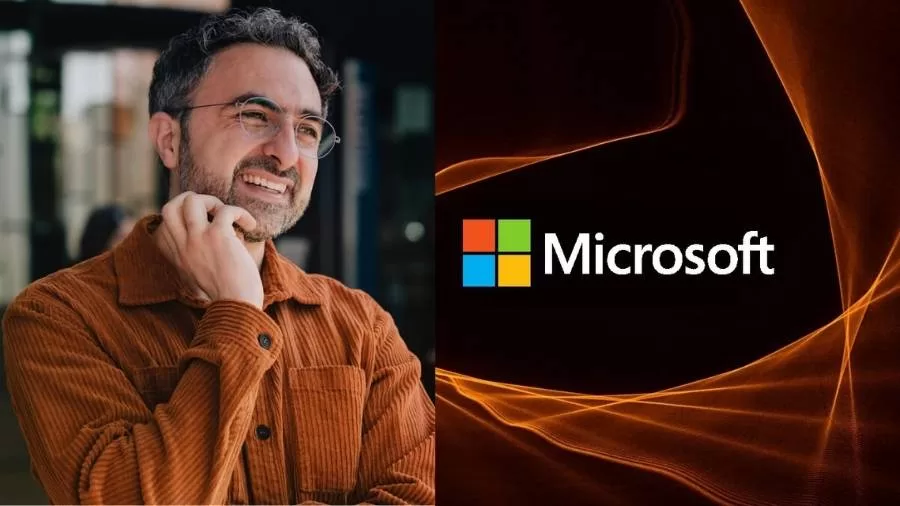
Microsoft Redefines AI: Superintelligence Takes Lead
In a bold move that signals a new chapter not only for the company but for the entire technology landscape, Microsoft has officially shifted its strategic focus toward building and deploying “superintelligent” AI systems for businesses. This change represents more than a product update or incremental innovation—it’s a redefinition of how artificial intelligence can shape productivity, decision-making, and even the global economy.
For years, Microsoft has been positioning itself as a leader in AI-driven solutions through partnerships, research, and products like Microsoft Copilot and Azure OpenAI Service. But recent announcements and emerging initiatives suggest that the company’s ambitions have expanded far beyond conventional AI tools. The term “superintelligence,” once mainly theorized in academic circles, is now moving into Microsoft’s core vocabulary—a reflection of its determination to pursue AI systems that can reason, learn, and enhance human capabilities at an unprecedented scale.
This shift is enabled by advances in large-scale machine learning, cloud infrastructure, and co-development efforts with OpenAI, the research lab behind groundbreaking language models such as GPT-4 and beyond. Microsoft’s unique position as both a software provider and a global cloud platform gives it the capacity to prototype and deploy advanced AI systems that can interact across every layer of enterprise operations—from analytics and cybersecurity to autonomous workflows and executive decision support.
According to insiders and public statements, the company envisions a future in which “superintelligence” acts as a co-pilot for organizations themselves. Instead of relying on AI tools for individual functions like content writing or data analysis, businesses could soon orchestrate AI-driven ecosystems capable of strategic reasoning, market adaptation, and continuous learning. In essence, Microsoft wants to create digital entities that understand the broader context of a business’s goals and can work autonomously toward achieving them.
While the idea sounds ambitious, it aligns with Microsoft’s track record of transforming industries—from ushering in the personal computer era to defining the enterprise cloud market. The inclusion of AI into every product category—from Office and Teams to Azure and Dynamics—has already reshaped how work gets done. The next logical step, as the company sees it, is moving from tools that assist people to systems that think alongside them.
New Era for Business as Microsoft Bets on Smarter AI
Microsoft’s pivot to superintelligent AI marks a strategic gamble on how the future of work and business intelligence will evolve. In this new era, the focus shifts from automating tasks to enhancing cognition—the ability of machines to contextualize problems, propose solutions, and make independent judgments within defined parameters. Such systems are not replacements for human intelligence but rather multipliers, amplifying decision-making speed, precision, and insight.
In practice, this transformation is unfolding through new forms of business integration with AI. Enterprises leveraging Microsoft’s ecosystem will soon experience AI not as a service layered on top of workflows but as an embedded component guiding operations in real time. For example, predictive AI models might autonomously manage supply chains by adjusting procurement or logistics based on live data feeds. In finance and strategy, AI-powered copilots could conduct scenario simulations and propose business restructures with supporting analytics before human executives even convene to discuss them.
This paradigm shift is supported by infrastructure investments as well. Microsoft’s Azure platform is central to the plan, offering the computational power and security framework required to handle such advanced models. Combined with the company’s collaboration with OpenAI and other research institutions, this infrastructure makes the dream of “superintelligence for business” not just theoretical but operational.
Still, Microsoft’s strategic pivot raises key questions. With superintelligent AI embedded deeply in enterprise functions, how will governance, accountability, and ethical oversight evolve? The company has repeatedly emphasized responsible AI principles, promising to develop systems that are transparent, controllable, and aligned with human values. But as AI becomes more capable, maintaining trust and safety will remain a complex balancing act—one that demands global coordination between governments, researchers, and businesses.
Looking ahead, analysts predict that Microsoft’s investment in superintelligence could redefine competitive advantage across industries. Companies that harness this new generation of AI stand to achieve radical efficiency gains and new forms of innovation. Those that lag may find themselves struggling to compete in a world where machine reasoning complements every layer of human work.
In summary, Microsoft’s bet on superintelligence marks not just an evolution of artificial intelligence but a revolution in how businesses think, plan, and act. The boundaries between human and machine intelligence are starting to blur, creating a hybrid future in which collective cognition—powered by superintelligent systems—could become the foundation of modern enterprise.
If successful, Microsoft will not only cement its dominance in the AI sector but also potentially define the architecture of the intelligent organizations of tomorrow. The age of superintelligence, once imagined in research papers and science fiction, is rapidly becoming a tangible reality—and Microsoft aims to lead the way.